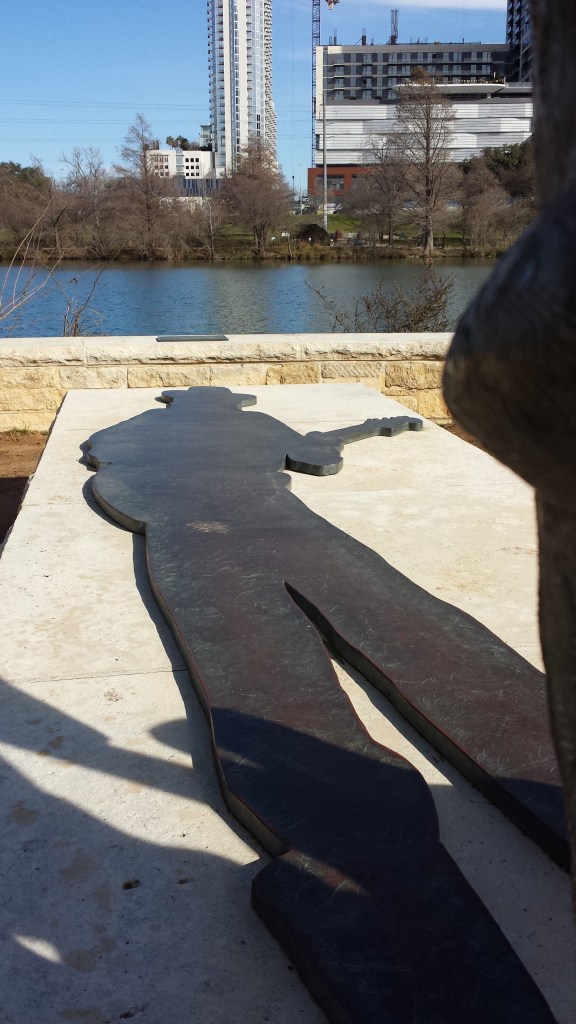
Before you get defensive, I want to assure you that I am a fan—a huge fan. I was a fan before his albums came out. I heard him on David Bowie’s Let’s Dance and I was hooked. I remember walking into a mall record store (there was such thing back then) and asking the person at the counter if they had the new record by David Bowie’s guitar player, some guy named Stevie Vaughan. She looked puzzled, asked a manager and I was told curtly, “No.” I found Texas Flood a week or so later at another store and wore it out. I bought a Strat shortly after (I’d been a Gibson guy before that), and a bit after that an old Black Faced Fender and a Tube Screamer and tried, in vain, to cop that sound. As other records came, like before, I couldn’t get enough. I did my best to absorb the songs, licks, feel and energy the best of my ability. Without a doubt therefor, the day after the helicopter crash that took Stevie’s life was one of the worst days of my life. It was surreal and stunning in a way I couldn’t describe. Especially because I knew that he had recently walked onto a good life path of sobriety.

Without a doubt Stevie Ray Vaughan had incalculable impacts on music during his career. Primarily, Stevie brought blues back to the mainstream with an energy that had not been seen since maybe Jimi Hendrix. If you didn’t know about blues before, chances are the whirlwind that was Stevie Ray Vaughan pulled you in at some point. In fact, I believe this is still the case. I would say that the number one most requested and played blues songs that I hear played in bars by a range of cover bands from rock to country, remain SRV tunes. People know these songs and they dance. I also know many people who picked up a guitar for the first time because of Stevie’s influence. I really believe that it is safe to say that it is possible that no other artist since the Beatles have had that kind of influence and impact.
With all of that said though, I began to see a familiar pattern emerge around the time of Soul to Soul—familiar because there is an industry pattern to replicate success and keep the money flowing from that success. Essentially a long string of Strat wielding (mostly) dudes (and more recently women), slinging overdrive drenched Albert King licks, some even wearing cowboy hats and boots emerged on the music scene with promotion and money behind them and claims they were the next big thing. They were fixtures at every blues fest and club. Many were forgettable and faded quickly. Some stuck and still grace the music scene–and have even carved out their own niche and identity. But either way, the industry continues to churn out the latest attempt at “the next SRV.” Even as the blues world shrinks, this trend continues. This is one lasting negative that Stevie, of course, really had nothing to do with. It was inevitable. That’s the way the business works.

There is, however, one other issue that seems to have evolved from his legacy, and that is, for many up and coming players, SRV is also where their blues world begins and ends. It’s as if nothing came before Stevie, and there is nothing worthy that has happened since. That is certainly not how Stevie saw it. He gave constant credit to his heroes and mentors, and did his best to use his new found fame to give them the spotlight as well. Stevie was a true blues ambassador, carrying on the work of giving homage and credit to the living and late legends upon whose shoulders he stood. He knew this, took his work seriously, and never forgot where he came from.
As I see it, these are exactly the things missing in so much of today’s blues world—history, connections, homage and original voices. There is a lot of shredding, pyrotechnical prowess and stereotypical song and lyric themes—but not much feel, heart or original creativity, the very things Stevie had in spades. He also understood the legacy AND the responsibility that came with that. Another thing often missing in big parts of todays “blues world.”
In fairness, this isn’t always true. There are some very original and creative artists out there today. However, so often, those getting the kudos and support are exactly the kinds of players I described above. There are specific artists that come to mind, and controversy has erupted in recent years because of what I think are some of these missing pieces, along with the tendency of most in the media industries to focus on the flashy and familiar first.
Partly because of all that I mention, there are students of music history who believe the time is coming soon for a music “revolution,” that will impact how is produced, recorded and distributed, and likely how we listen to it (Go here for an example of this discussion). I also believe that that “blues sound” (click here for an article on what this is and why it’s important) will be at the heart of that revolution. Maybe a modern version of the “British Invasion,” or something like that. The need is there, and I believe the time is right.
Play on!
Join our Facebook page Real Blues You Can Use for more discussions on these topics. For in-person or virtual lessons, coaching and mentoring with Mark, contact him at: imwiththebandmz@gmail.com and visit his website at: www.im-with-the-band.org.
Mark Zanoni
 I'm With the Band
Interesting article. I promoted a show about a year before his passing in Green Bay WI. And after sound check he asked me to find him a AA meeting in town he could attend. He was was really setting a positive example for musicians of all styles and I won’t just classify him as a blues musician, he was so much more!
LikeLike
He set an example for others too. I had students who met him at meetings. It meant a lot
LikeLike
He tended to go to meetings where he played. Some of my students at a school where I worked met him at one meeting in Madison, WI. It was a big, big deal for them
LikeLike
Oh…a few more thoughts on whether he was a “blues” player or not. It is critical to have a real, actual working definition of what blues actually is. It isn’t just 12 bars and a pentatonic scale and really never has been just that. Here is an article with more details and a definition that is workable. By this definition he was most definitely a blues player in all regards–or at least a skilled practitioner of blues based music with all of the foundation factors necessary to pull that off. https://im-with-the-band.org/2023/03/21/why-the-blues-is-still-important-maybe-now-more-than-ever/
LikeLike